


Cabbage has also contributed to our survival - it was one of the first crops that humans began to cultivate. During the Iron Age, cabbage and other vegetables were grown near settlements and during the Middle Ages it was a crime NOT to cultivate them. The Gutalagen, a law book from the 13th century, states that "every farmer who has not sown but has a house shall have half a hectare of land for turnip fields".
During the wars, there was poverty in Sweden and it was especially bad in 1917 when the country was hit by crop failures. At that time, it was grown on all available land, such as on Karlaplan in Stockholm, where the kale grew strong. That would be something to introduce in every square in Sweden! Cabbage farms where everyone got to take what they needed and which we all helped to take care of. That would make us all feel good!
In peasant society, cabbage dishes were common food all over Europe – during the 16th century, the expression likka god källsupare was coined. This means that one shares the meal – supa means eating soup – with an equal and is therefore just as good (or bad) a person as the other.
Cabbage is a smart winter food: cheap, low in calories, strengthens the immune system, contains a lot of fiber that gives a long feeling of satiety and keeps the stomach moving, can (in combination with lifestyle) prevent certain cancers, and cabbage can be varied in all sorts of ways.
All varieties of cabbage contain vitamin C, beta-carotene, folate, some B vitamins, phosphorus, calcium, potassium, magnesium, antioxidants and a variety of micronutrients that are good for you.
But if you sigh, you get so gassy... don't worry, just calm down, I'll answer: eat the cabbage cooked or fermented so it's easier to digest. And feel free to season it with spices like thyme or cumin, which help with gas.
But isn't that boring, you ask? No, eat cabbage every day! There are so many different varieties, here are some examples: Cauliflower Brussels sprouts fennel kale Chinese cabbage kohlrabi turnip long cabbage pak choi red cabbage romanesco black cabbage pointed cabbage savoy cabbage asparagus cabbage Tatsoi white cabbage wild cabbage field cabbage black mustard…
Serve it raw, pickled, fried, grilled, boiled or pickled. In hearty salads, soups or hearty stews. Some suggestions for classic cabbage dishes: kimchi, coleslaw, cabbage dolmar, cabbage pudding, cabbage soup, long cabbage, sheep in cabbage (it's great to replace meat with a vegetarian alternative), cabbage casserole…
Here is a recipe I like:
Brussels sprouts with dates
Butter or rapeseed oil
Brussels sprouts, halved (or any other type of cabbage)
Yellow or red onion, peeled and chopped
A few dates in pieces
Salt
Pepper
Rosemary
Orange
Heat the fat in a frying pan, add the cabbage and the chopped onion and let it brown until the cabbage feels cooked through. Add the chopped dates and season with salt. pepper and rosemary. Squeeze in a little juice from the orange. Heat up. Serve with pasta or risotto, for example.
Stay wild
The Lisen 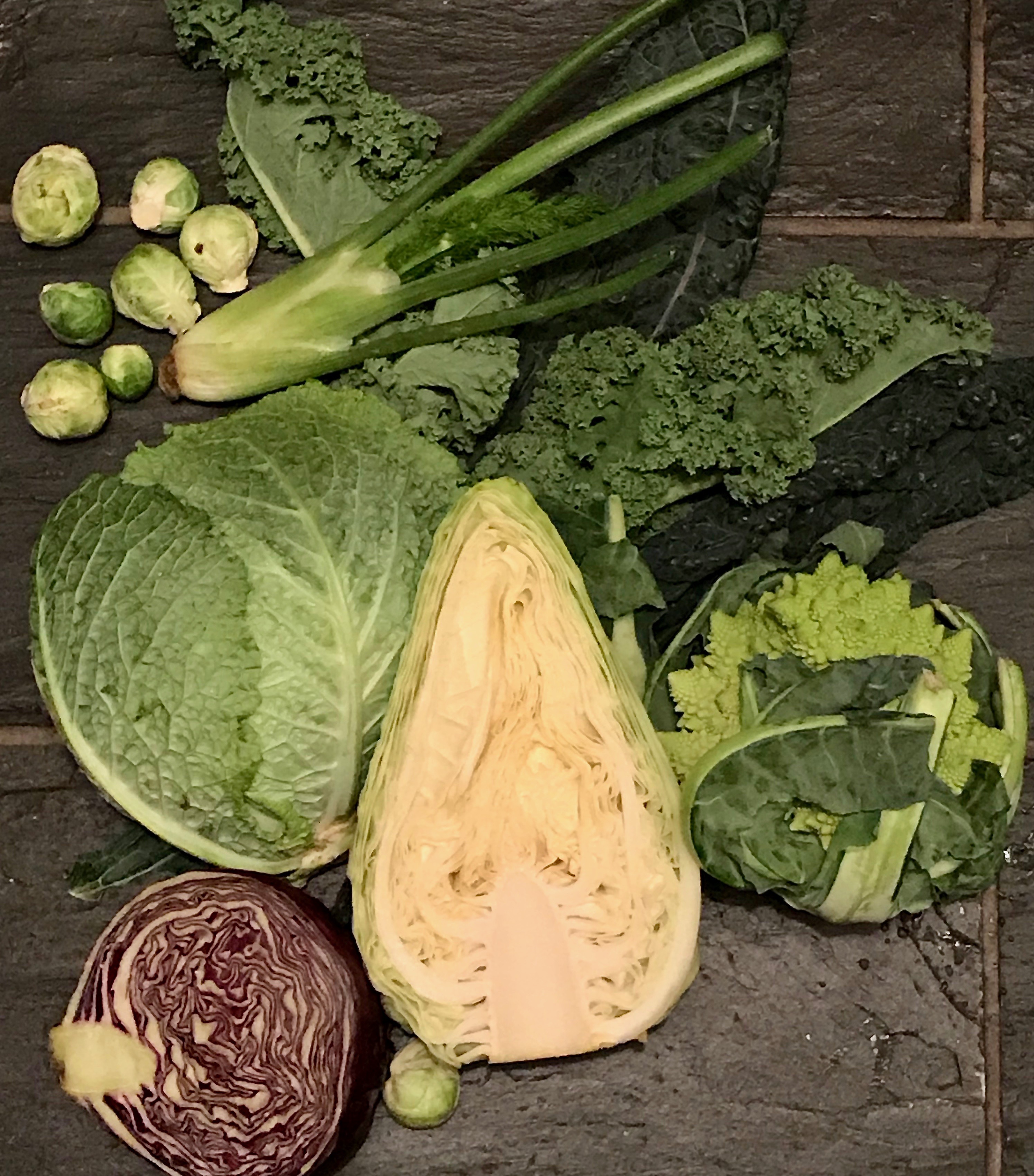


Comments
No comments yet